Showing posts with label Italy. Show all posts

Tuesday, 5 September 2017

A Little bit of Luxury from Northern Italy - Valtellina DOCG

Nebbiolo is one of my favourite grapes; hardly surprising when you think that it produces two of Italy’s most famous and prestigious wines - Barolo and Barbaresco. If you move further north in Piedmont you find the wines of Carema and Gattinara, however, if you move eastwards and into the Lombardy region, just along the border with Switzerland to the shores of Lake Como, you find the wine Valtellina.

Produced from Nebbiolo, or as it’s locally known Chiavennasca, the Wine Makers are also allowed to blend in another local variety, Rossola Nera, with up to 20% for the DOC or 10% for the DOCG wines. However, restrictions on harvest yields, minimum levels of alcohol, and as the wines must also be aged for two years prior to being released, unless they are Riserva which necessitates three years, means it is far from a quick process in getting the Wine to meet these specific requirements. Within the region there are several villages who are considered higher quality; Grumello, Sassella, Inferno, Valgella and Maroggia- these are, of course, indicated on the label. They also produce an Amarone style DOCG wine called Sforzato.

One of my favourite producers of these wines is Rivetti& Lauro. They produce several wines, including the really quite unique wine ‘Calis’, a white made from Pignola (another name for Nebbiolo) and Sauvignon. They also have wines from the villages of Sasella and Inferno, and produce the amazing Sforzato.


The 2012 Inferno DOCG Valtellina is produced in small quantities; only 3,300 bottles, and is 100% Nebbiolo. Grape selection is done by hand and they are destemmed before being crushed and subsequently fermented in Stainless Steel tanks. After the fermentation process, the wine is aged for two years in French oak barrels.

In the glass, the wine has a bright ruby red/purple colour to it, with pronounced aromas of Cherry, Vanilla and Clove. These come through on the palate beautifully and combines with the tannins and acidity perfectly. It drinks beautifully now and will continue to age and develop for the next ten years.
The 2011 Sforzato DOCG Valtellina goes through a very similar process as the other Valtellina DOCG wines, however there is one big difference; the grapes are dried on big wooden racks for three/ four months before crushing, in a similar way to Amarone.

The drying of the grapes first adds a real concentration to the wine, with aromas of red berry fruit, Tobacco and Truffle. On the palate, the fruit translates to significantly more wild berries with hints of Violets and Tobacco. Combine this with the fine but grippy tannins, and you have a remarkable wine that’s big, powerful and rich.

These wines really are incredible. Although certainly a little harder to find, if you manage it I can assure you, you will not be disappointed. 

Friday, 30 September 2016

A Look At Whats On Tasting This Weekend

For this weekend I've decided to put on tasting a wonderful big, rich and spicy red from northern Italy, and lovely crisp and fruity white from Burgundy.

For the red we've got the 2011 Travaglini Gattinara from Piedmont open this weekend, apart from having a really cool and interesting bottle this is an amazing wine. Produced from 100% Nebbiolo, the same grape that produces the wonderful wines from Barbaresco and Barolo, The commune of Gattinara was granted it's DOC status in 1967 and DOCG 1990, it's situated in the northern part Piedmont about 50 miles north east of Turin, with the Alps as it's back drop to the north.

The design of the bottle, apart from standing out on the shelf and looking really different from anything else, has been designed to help catch the sediment that this wine sheds as it ages. The wine is fermented in Stainless Steel tanks and then transferred to various size of oak barrels for 36 months, and then a further 2 years in bottle, which gives the wine time to take on extra dimensions from the oak and for it then to have a chance to integrate together beautifully.

The wine itself is wonderfully complex, with aromas and flavours of red berries, blackberries and plums, combined with the sweet spice spices of liquorice and vanilla followed by hints of leather. These all combine beautifully in the glass creating a wonderfully complex, rich full bodied wine for you to enjoy, but just take my word for it, pop in the shop this weekend for a taste.

On the white front we have a very classy 2015 Petit Chablis from Chateau de Chemilly. The main Kimmeridgean clay, where as in the Petit Chablis vineyards the soil is more Portlandian soil types.
difference between Chablis and the extended area Petit Chablis is the soil type, the soil in Chablis is predominantly

The estate is now managed by brothers Loic and Yannick Vilain who are breathing new life into this 50 year old domaine in the south eastern corner of Chablis. They take considerable care with the vines to help the fruit to generate that mineral character you'd expect from this region.

Thi wine has all the classic characteristics that you'd expect, lovely fruit ranging from green apples to hints of white peaches, a crisp minerality and beautifully balanced acidity just combine to create a beautiful glass of wine. Definitely worth popping in this weekend for a taste.


Thursday, 3 September 2015

A Little Star from North Western Italy - Livon Friulano

Livon are a family run winery situated in the North Eastern part of the Friuli Venezia Guilia region in Northern Italy on the borders with Slovenia and Austria. Dorino Livon purchased his first vineyards in the region in 1964, and has continued to grow the estate over the years, while he has also built a state of the art winery. In 1980 Dorino's two sons Valneo and Tonino joined the company and started to create different ranges from the vineyards that they owned, with some being very small production from a selection of there best sites. They have continued to grow and the family now own another four wineries, two of which Tenuta Roncaldo and Villa Chiopris are also in Friuli, Borgo Salcetino is in Tuscany and Fattoria Col Santo are from Umbria. They grow a wide selection of both Indigenous and International grape varieties, producing an equally as wide range of wines across their entire portfolio.

The wine I want to talk about though is the 2013 Livon Friulano, the Friulano grape is also known as Sauvignon Vert, which many people actually get confused with, and refer to it as Sauvignon Blanc, which despite the similarities in their names, are of no relation.

The grapes are all harvested by hand and then fermented in stainless steel tanks, where they spend a further 5 months before being bottled, spending a little bit more time before being released.

In the glass, the wine had a lovely bright straw colour to it with some delicate greens hints. On the nose it was very aromatic, with some lovely fruit, hints of spice and Almonds. These all came through on the palate, the wine itself had quite a rich mouth feel to it which was perfectly balanced to the acidity, that cut straight through it and stopping it from being too rich and over the top. All the components came together perfectly with this wine, producing something that had a great depth and complexity while maintaining a freshness to it that made it extremely enjoyable.

Tuesday, 7 July 2015

A Visitor from Italy - Jeffrey Chilcott from Marchesi di Gresy

At the beginning of last month I had the pleasure of meeting Jeffrey Chilcott, the cellarmaster for Marchesi di Gresy, who are based in the Piedmont region of Northern Italy. The winery is based in Martinenga, Barbaresco which for me is an area that produce some of Italy's greatest and aromatic wines, predominantly from the red grape Nebbiolo, but have added Merlot, Sauvignon Blanc and Chardonnay in to there repertoire.

Marchesi di Gresy is made up of four estates, the estate in Martinenga became the property of the Marchesi di Gresy family in 1797, adding to their property in Monte Aribaldo that they had acquired in 1635. They also have properties in Monferrato, La Serra south of Asti and close to it Monte Colombo. Alberto di Gresy in 1973 decided to stop selling his grapes to other merchants which were used to set the benchmark price in the markets of Alba and start to produce his own wines. Included in the property in Martinenga, is the only Barbaresco Cru Monopole which only Marchesi de Gresy can mention on their labels.

Jeffrey had bought a selection of his wines for us to taste covering the Langhe, Monferrato his Barbaresco Cru and single vineyard, there were two wines that really stood out for me, but here are the others. The 2013 Langhe Sauvignon Blanc had some lovely green fruit flavours with a slightly richer texture from the lees stirring, and the perfect touch of acidity. 2012 Villa Martis Langhe Rosso, this is a blend of 60% Nebbiolo and 40% Barbera with french oak and large neutral oak barrels used. It was delicate and aromatic on the nose with some lovely fruit and a well balanced structure from the tannins and acidity.


The last two I tasted were two wines from the Martinenga Monopole, the 2008 Barbaresco Martinenga, this wine was everything you'd expect it to be and possibly even more. With a very pale red colour and a garnet rim showing signs of it's age, it had some lovely dark fruit, smoke, leather and spice aromas, with them all coming through on the palate giving it a meaty character. It still had plenty of soft and silky tannins with just enough acidity to clean them from your palate, making it a very stunning glass of wine. We then tasted the 2005 Barbaresco Camp Gros Martinenga, this single vineyard site is the pride of the estate and has been produced since 1978, only in exceptional vintages though. Considering this was three years older than the previous wine, in the glass it looked and smelt richer and with more depth, it had all the characters of the first Barbaresco but you could be mistaken for it to be a lot younger. This again was a stunning glass of wine and you could see what an exceptional wine this vineyard site can produce, this will last for another 10 years without any problem. Both of these wines were exactly as they should be, but they aren't cheap, ranging from £47 - £54 for the 2008 and £69 - £77 for the 2005.

The first of the two that really caught my eye was the;

2012 Langhe Chardonnay,
I'm not usually the biggest fan of oaked Chardonnay, but this one was stunning, produced from fruit grown on the Martinenga, Monte Aribaldo and La Serra estates it had this lovely bright golden colour to it. The wine starts it's fermentation in Stainless Steel tanks for the first couple of days before then being transferred into oak for further fermentation and maturation. This gave the wine a wonderfully rich and creamy texture with hints of baked green apples, nuts and lanolin, the nutty characters really started to shine over the fruit on the palate with a balanced acidity that stopped it from being over the top and making it a very enjoyable glass of wine.

The second was the;

2007 Monferrato Rosso,
This wine is produced from 100% Merlot which is grown on the La Serra and Monte Colombo estates and was not starting to show any signs of it's age yet. It spends around 30 months in French barriques before spending a further 22 months in bottle the wine is also allowed to go through malolactic fermentation. With all this you get a deep red colour with aromas of macerated dark berry fruits with some hints of spice and smoking coming through, lovely fine and silky tannins and just enough acidity to make them all combine perfectly and produce another stunning glass of wine.

It is hard to find a bad wine in what we tasted, the Barbaresco's were, as I had expected them to be, stunning, but when you compared them by price to the other wines, the Langhe Chardonnay (£25 - £29) and the Monferrato Rosso (£16 - £18) were the real stars that shone out for me. I'd like to say a massive thank you to Jeffrey for taking the time to come and show me his wines.

Wednesday, 11 February 2015

A Carema from Produttori del Carema

Over the last few months I've been learning about and tasting a lot wines from Italy, who have to produce the broadest range of wines than anywhere else, which is hardly surprising when you think about the fact that they have over a 1,000 indigenous grape varieties.

I've always found Italian wines a little difficult, the reds always tend to have a slightly sour edge to them, which without food can make them difficult to really appreciate, but there was one that really stuck in my mind. That was the 2011 Carema Classico from Produttori del Carema, this is a cooperative that was formed in the 1960's by a handful of producers, to today where they now have 81 producers working together to produce this fantastic from 100% Nebbiolo


Carema, the region in Northern Italy which gives it's name to this wine, is located 60 miles north of Turin in the Piemonte region, which is probably better for producing Barolo and Barbaresco also from the Nebbiolo grape.

They ferment the wine in 100% stainless steel vats, leaving the skins in contact with the wine for around 12 days, once complete they then age the wine for 2 years in Oak and then for a further year in bottle.When you pour this wine into your glass the first thing that strikes you is it's very pale ruby red colour, which is starting to develop hints of brick around it's edge. On the nose you get hit by a barrage of spice, nutmeg and cinnamon, then red berries that have been preserved in alcohol, These all come through in your mouth, with the red berries being very obviously sour cherry, with just a little more elegance and subtlety than i'd seen so far, but you also had some Raspberry coming through as well. Combine this with the spice and the plentiful silky tannins and all  the components come together and produce an absolutely stunning wine that rivals anything for twice it's price from Barolo and Barbaresco for me.

Monday, 18 August 2014

A Tasting with Paola Falabretti from Camigliano

Tastings seem to have been coming thick and fast for me recently, and we head back up from the southern hemisphere and to Tuscany in Italy with Paola Falabretti from Camigliano, to taste through some of their wines.

Camigliano is a village which can trace its origins back to Etruscan times, and was dedicated to the cultivation of grapes and olives. In 1957 Walter Ghezzi bought the estate, and produced their first Brunello vintage in 1965, the estate today extends over 530 hectares, of which 92 are under vine. To the south of Montalcino their are 50 hectares planted with Sangiovese Grosso which is used to make their Brunello. The grapes are still harvested by hand and the winery has been designed for minimal environmental impact by building the majority of it underground, they also use gravity to move the wine around to avoid any damage to the wine.


I got to taste through a few wines from their range, but 3 really stood out for me;

2013 Gamal Vermentino

Fermentation happens in stainless steel to help preserve the wines freshness, with a lovely green hue in the glass, you got delicate aromas of grapefruit and lime, a touch of tropical fruit and delicate floral aromas. On the palate these came through beautifully combined with a zingy acidity which gave this a real refreshing character. Definitely a great one to try, especially nicely chilled on a hot sunny day.

2011 Chianti Colli Senesi

The grapes for this wine come from some of the youngest Sangiovese vines on the estate which give the wine much more fruit flavours, and is fermented in stainless steel with pumping over the skins for 8 - 12 days to help preserve these. The wine had deep purple/red colour in the glass, with pronounced aromas of dark fruit, cherries, blackberries, on the palate you got this wonderful sour cherry with some soft and silky tannins which all combined fantastically and produced a great wine for drinking.

2009 Brunello di Montalcino

Again produced from Sangiovese, the grapes are fermented in stainless steel with pumping over for 15 - 20 days after fermentation, it is then aged in oak barrels, then a final two years in stainless steel and bottle before release. You got a pale red with an orange rim in the glass, with some delicate aromas of dark fruit, spice and tobacco box. These all came through in wave after wave gloriously in the mouth, combined with a gentle acidity and soft/silky tannins which were all combined perfectly. Now I haven't tasted many Brunello's to help me to compare quality and style, all I can say is that it was a magnificent wine that for that special occasion I would definitely recommend.

I have to say I was very impressed with the wines from Camigliano and I would definitely trying any of them, whether it be as an everyday wine the Chianti Colli Senesi or for that special occasion with the Brunello di Montalcino you definitely won't go to far wrong.

Tuesday, 3 June 2014

A Tasting with Alexandra Curatolo from Curatolo Arini Part 2

Having first spoken about their Marsala wines, we should also have a look at some of the other wines they produce;

2012 'Coratto' Inzolia
This had a pale straw yellow colour, with delicate aromas of citrus and white flowers, these came through on the palate with a touch of stone fruit and melon coming through. It has quite a steely minerality combined with a racy acidity that worked very well together, a very refreshing wine that would be great for hot sunny lunch time drink, even more so at 12.5%.

2011 'Coralto' Nero d'Avola
This wine had a bright ruby colour with pronounced aromas of spice, red fruit and violets. On the palate these came through, the red berry aromas turning into more sour cherry that is so typical of Italian reds. It had a good amount of fine grippy tannins and a balanced acidity which helps wash away the tannins and let the flavours linger that little bit longer.

And finally, the one that really caught my eye;

2013 'Curatolo Arini' Zibbibo
This is produced from 100% Zibbibo, which also goes under the name Muscat of Alexandria, is fermented in stainless steel to help preserve the flavours and freshness of the wine. As with the Inzolia it has a pale straw yellow colour, with pronounced aromas of grapefruit, orange blossom with hints of sage coming through. These all came through on the palate with grapefruit still the dominant flavour, it had a crisp and fresh acidity which was well balanced with the fruit. This for me was the star out of these three wines for me, and one I'd say was worth grabbing a bottle and giving it a try.


Friday, 16 September 2011

A Tasting with Jascots Wine Merchants

Last week saw an abundance of tastings happening around London town, and of course I attempted to attend as many as I could humanly possibly attend in one day, I love my wine but I can still only drink so much before it everything blurs into one. My final port of call for the day was the Jascots Wine Merchants tasting in Cavendish Square, I arrived mid afternoon very wet and probably not really in the mood, (I’d been up all night with two very poorly kittens) but I’d been invited and it would have been very rude not to turn up. On arrival I was introduced too Ben who was a member of the Jascots team and would be my guide around the tasting, I have to admit I was great to have someone to go around with and talk about the wines too, and not just make notes on my own.

Despite my initial lack enthusiasm, as we went round I was pleased to find that there was still a lot of wines that really caught my eye, well actually my taste buds, but there was one vineyard that really stood out, TerraVin from New Zealand, who I nearly missed had it not been for Ben insisting that I taste them. They also had Mike Weersing on hand who is their winemaker, after spending a good half an hour talking to Mike and tasting his wines we had to push on, I was so impressed with his wines they deserve a post on there own, which will be coming soon.

Getting back to the rest of the wines on show, there were so many that I could talk about, but here are the five that stood out to me;

2010 Three Choirs ‘Winchcombe Downs’, Gloucestershire – Yes, I  know an English wines starts us off, but this is really a fantastic wine, with loads of green fruit and a touch of white pepper flavours and aromas, a rich and rounded mouth feel and well balanced level of acidity, really enjoyable.

2008 Bolfan Primus Riesling, Croatia – Again a country not really known for producing great wines, but they’ve managed one with this. With plenty of green fruit, citrus and loads of acidity, it really was showing all the classic Riesling traits, as opened up a little you started to get the faint aromas of petrol in the background, which you only tend to get from aged Rieslings, it really was quite stunning.

2010 Maison de la Paix Old Vine Carignan, Vin de Pays d’Oc, France – An entry level wine with lashings of dark fruit, fine tannins and a good amount of acidity all combining to make a well balanced and great drinking wine, one I shall definitely be keeping my out for.

2006 Cellar Cal Pla, Priorat, Spain – A wine that I’ve really only just found and started to enjoy, this is a blend of Garnacha, Carinena and Cab Sauv, producing a wine with a deep ruby/garnet colour and pronounced flavours and aromas of plums, damsons and spice. With these were the perfect amount of tannins and acidity which, when all combined together produced a stunning wine, shame about the bottle label though!

2003 Rocca Rosso, Angelo Rocca & Figli, Puglia, Italy – This had I have to say one of the biggest and  heaviest bottle I’ve seen for a long tine, probably also not the most environmentally friendly, but the wine was delicious. With baked dark fruits, oak and loads of sweet spice, a tiny amount of fine tannins and enough acidity to go with the fruit and spice, all combining to produce a really interesting wine. 

I must say, there were a lot of very good and enjoyable wines on show, a lot more than I’ve written about, these were just a few that really stuck in mind, but don’t forget to keep an eye for my post on the wines from TerraVin, which should be up very soon.

Wednesday, 7 September 2011

A Supermarket Tries Something New


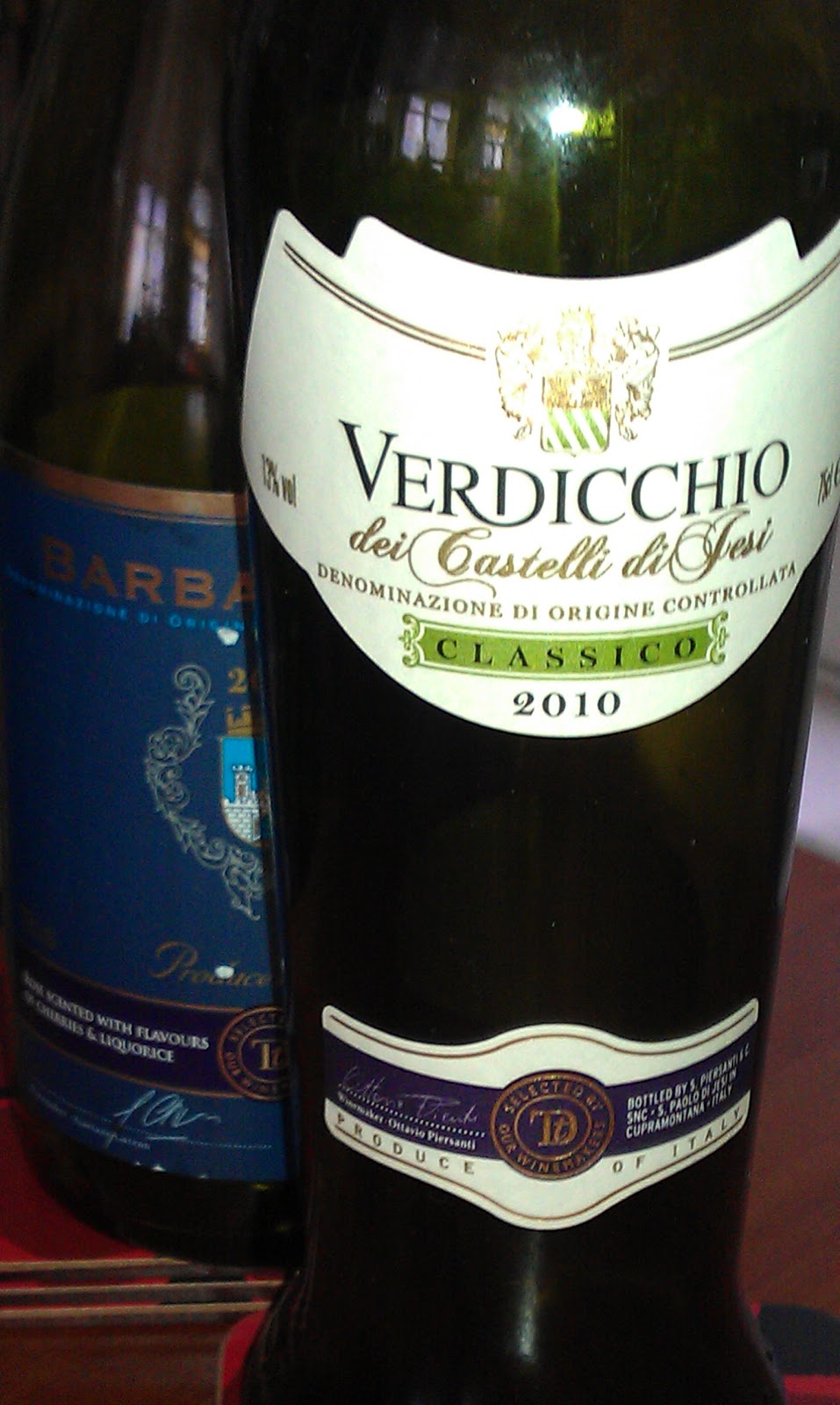
I was sent a press release and two samples from Sainsbury’s the other week, telling me that they had introduced 5 new wines to their Taste the Difference (TTD) range, and that they were the first major supermarket to sell the indigenous grapes, Marzemino and Brachetto. Having read the press release I got quite excited and had a look at the samples I’d been sent, I was surprised (and a little disappointed) to find that I’d been sent the TTD Verdicchio Classico dei Castelli di Jesi and TTD Barbaresco, not the Marzemino or the Brachetto, but never mind, I still had some interesting wines to taste.

As you do, I went for the white first, which had been billed as an alternative to Pinot Grigio, which for me at this price point, is a great place to start, as there are far too many one dimensional and uninteresting Pinot Grios on the market. Produced in the Marche region of Italy on its Adriatic coast, it’s vinified in stainless steel to help keep its freshness.

On pouring you got a pale straw colour, with the fresh aromas of apples and cut grass, on the palate these all came through, with a good level of acidity making a really refreshing wine. It was an uncomplicated, but very pleasant wine which I have to agree is a good alternative to Pinot Grigio.

Moving onto the Barbaresco, this comes from the Langhe hills in the Piedmont region of northern Italy, produced from the indigenous grape Nebbiolo, which is also used in one of the great wines of Italy, Barolo. For its DOGC status it must be aged for a minimum of two years, with a minimum of 12 months must be in oak.

In the glass it had a deep red colour, not quite as dark as I’d have expected being Barolo’s “baby brother”, it did have quite pronounced aged aromas of red fruit, cherries and currants, after the fruit you got the sweet spice of liquorice. On the palate you got the fruit and spice coming at your taste buds in waves, combined with fine, silky tannins and a reasonable amount of acidity, this was all combined perfectly.


These were two interesting wines, the Verdicchio; fresh, fruity and a great alternative to Pinot Grigio all for £5.99, while the Barbaresco was rich and starting to show real signs of complexity for the princely sum of £9.99.

Monday, 17 May 2010

Bibendum World Cup of Wine Semi Finals

Last Thursday I went along to the Bibendum World Cup of Wine semi finals, which saw France take on Italy, and South Africa compete with Australia. Each round featured two whites and two reds from each country, with some strong competition to see who would make it to the final next month!

First up was Australia versus South Africa – starting with the white selection. Australia kicked off with a strong showing, turning out a Deakin Estate Artisan Blend Chardonnay/Pinot Grigio and a Stonier Chardonnay. However, it faced some serious competition from the South Africans, who showed up in force, with a fantastic Graham Beck, The Game Reserve Chenin Blanc and Springfield Estate Wild Yeast Chardonnay on offer. At half time in this match, it had proved all too easy for the South Africans, who were on their way to a clear victory, with a two-nil lead, thanks to the wonderful complexity of the fruit flavours and the refreshing acidity on both of their wines.

Second half and we’re on to the reds. Australia fielded a Marchard & Burch Mount Barrow Pinot Noir and d’Arenberg Stump Jump GSM, against the South African Newton Johnson Pinot Noir and SAAM Heldersig Shiraz/Viognier. The Pinot’s provided much more of a competition, tying for points, with the Shiraz/Viognier beating the GSM, thanks to its beautifully balanced flavours and tannins. Final score: Three-nil to South Africa. We have our first finalist.

So, we’re on our next match of the evening, and this is the one we were all waiting for – the battle of the old world legends, France versus Italy. The excitement in the air was palpable as the first half wines were unveiled. France decided to opt for a Chablis 1er Cru, from Cote de Lechet, Domaine Jean Defaix, and a Viognier de l’Hospitalet from Gerard Bertrand, whilst Italy turned up with a Soave Classico Monte Carbonare Suavia and an Alois Lageder Gewurtztraminer. It was pretty close throughout, with the Chablis and Soave really battling it out, before the Soave managed to break free, scoring the first goal of the match; one-nil Italy. With everything on the line, it was tense, but a surprise take down of the Viognier by the Gewurtztraminer, gave Italy the edge at half time, with a two-nil lead.

And so, after a short interval, we’re on to the last half. The reds. From France we had a Ventoux Rouge, Terre de Truffes, TerraVentoux and a Chateau Lalande Borie, St Julien, while Italy served up a Col di Sasso Banfi Cab Sav/Sangiovese, and a Valpolicella ClassicoSuperiore ‘Ripasso’ Seccal, Nicolis. It was tough, but for me the Banfi beat the Ventoux, with its youthful fruit and spice. Sadly, the group disagreed; France regained some pride; score: Two-one, Italy. Onto the final pairing. Most people would agree that this was no contest – the Chateau Lalande Borie should have beaten the Valpolicella hands down. But, we were in for another surprise, the Valpolicella put up a strong fight, and won. Three-one Italy! We have our two finalists - South Africa vs Italy!

The stars of the evening for me were the Graham Beck, The Game Reserve Chenin Blanc, a stunning example of how good Chenin Blanc can be, although we all agreed it would benefit from a couple more years aging, but still, it was fantastic now. Secondly, the Valpolicella ClassicoSuperiore ‘Ripasso’ Seccal, Nicolis, apparently this is a difficult wine to sell, personally can’t imagine why!

Finally, I’d like to say a big thanks to everyone at Bibendum for organising such a great evening! I’m really looking forward to the final next month!

Friday, 25 September 2009

Valdo Prosecco di Valdobbiadene Marca Oro


I’ve written about several sparklings before, namely Cava and Champagne, but recently got the opportunity to taste Italy’s offering, Prosecco. The wine in question was Valdo Prosecco di Valdobbiadene Marca Oro, which is available from Sainsbury’s for around £7.

Haling from the North East of Italy it’sproduced using the tank method. For this process the base dry wine is placed with sugar, yeast nutrients, and a clarifying agent in a sealed tank. Secondary fermentation then takes place, resulting in a fresh, uncomplicated sparkling wine, as was the case with this one.

This wine had large, vigorous bubbles, with a straw colour. On the nose it presented aromas of green apples, with a touch of lime thrown into the mix. To taste, the wine was exactly as it smelt. A thoroughly enjoyable drink, there was a wonderful balance between the dryness of the wine, the refreshing acidity, and the fresh fruit flavours.

Recommendation: If you’re looking for a crisp, refreshing, uncomplicated sparkling, go for this one. However, if you’re looking for something a little more refined, without paying the price of Champagne, go for a Cava!